

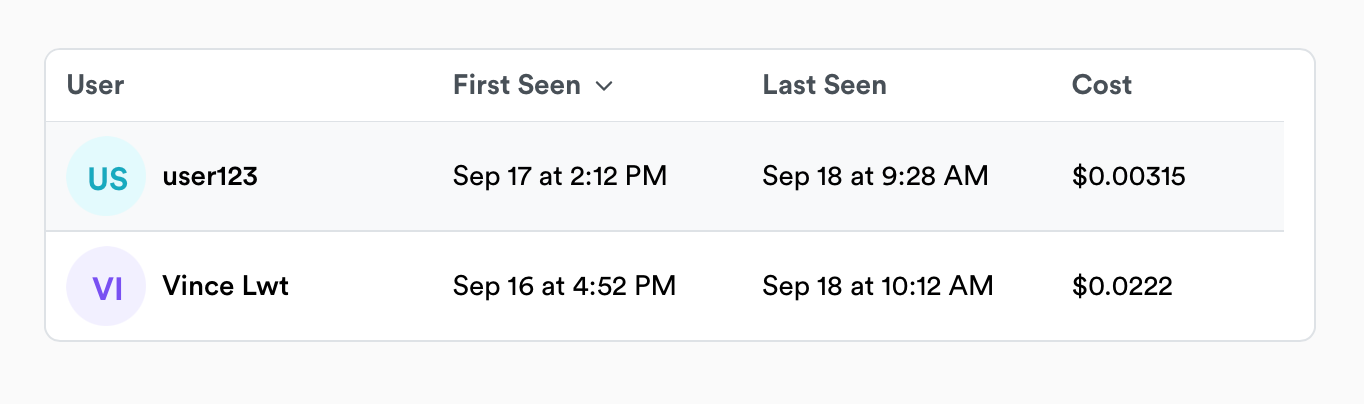
userId, however you can report any property you’d like such as an email or name using an userProps object.
Tracking users with the backend SDK
Python
Learn how to install the Python SDK.
JavaScript
Learn how to install the JS SDK.
Identify OpenAI calls
The easiest way to get started tracking users is to send user data with your OpenAI API call.- Javascript
- Python
- Javascript
- Python
Advanced: Inject user into context
When tracking traces, you can inject user data into the context using theidentify methods. This will cascade down to all the child runs.
- Javascript
- Python
Identifying users on the frontend
If you are tracking chat messages or feedback on the frontend, you can use theidentify method to identify the user there.
Identifying Threads
If you are using threads to track conversations, you can passuserId and userProps to the openThread method.